

Blog
Trips on the weed plants, what now?

Thrips on Cannabis Plants, What Now? Effectively Control and Prevent for Healthy Plants
If you’re a grower dealing with thrips on your cannabis plants, it can be a major setback in your cannabis growing adventure. These small, persistent insects can damage your plants and reduce growth and yield. Fortunately, there’s a lot you can do to identify, control, and even prevent thrips. In this comprehensive article, we dive deep into the world of thrips, with practical tips, step-by-step advice, and valuable insights for both beginner and experienced growers. Whether you’re buying cannabis seeds for your next grow project or already in the process, mastering pests like thrips is essential for successful cannabis growing. We discuss the life cycle, identification, control methods, and prevention tips, so you can keep your plants healthy and fully enjoy your harvest. Let’s start by understanding this troublesome pest.
What Are Thrips and Why Are They a Problem for Cannabis Plants?
Thrips, small insects from the order Thysanoptera, are notorious pests in horticulture and specifically in the cannabis industry. They are particularly damaging to cannabis plants because they feed on the juicy tissue of leaves and flower buds, leading to discoloration, deformation, and even reduced yield. For growers buying cannabis seeds and cultivating plants in a controlled environment, a thrips infestation can quickly spiral out of control, especially at high temperatures and low humidity. This makes it even more important to take preventive measures, such as monitoring humidity during cuttings, to keep these pests at bay. Thrips can also transmit diseases, further undermining the overall health of your plants. By intervening early, you protect not only your current grow but also lay a better foundation for future projects with fresh cannabis seeds.
The Life Cycle of Thrips: From Larva to Adult Insect
To effectively control thrips, it’s crucial to understand their life cycle. These small insects go through as many as six stages, explaining their persistence. It starts with the egg, often laid on the underside of leaves. After hatching, the larvae develop quickly. In this stage, they are barely visible to the naked eye – measuring just 0.5 millimeters – and already cause damage by feeding on plant sap. Subsequent stages include the prepupa and pupa, after which they grow into adult thrips. The entire cycle takes only 11 to 20 days under ideal conditions, such as temperatures between 20 and 30 degrees and low humidity. This rapid pace means a small population can multiply exponentially if you don’t intervene.
For cannabis growers, this is especially relevant because thrips thrive in warm, dry environments, which are common in indoor grow spaces. To prevent this, we recommend regularly checking humidity and maintaining a balance, as discussed in articles on humidity during cuttings. A practical tip: keep your grow space clean and remove any plant debris, as thrips love to lay eggs on dead material. If you’re buying cannabis seeds from our cannabis seeds shop, make sure to start them in a clean environment to minimize the risk of pests.

Identifying Thrips on Cannabis Plants: Early Signs and Symptoms
Identifying thrips on your cannabis plants is the first step toward effective control. Typical symptoms include light, silvery or yellow spots on the upper side of leaves, caused by the tiny feeding punctures thrips make. This damage can lead to discoloration and even curling of young leaves, stunting growth. Also check the underside of leaves, where you might spot the small, moving insects themselves. Adult thrips are often black, brown, or yellow and measure about 1-2 millimeters, while larvae are even smaller.
Practical identification tips: Use a magnifying glass for accurate inspection, especially in early stages. Combine this with regular checks, such as weekly, to catch problems early. If you’re growing cannabis outdoors, be extra vigilant for thrips, as they can easily jump from nearby plants. For more outdoor growing advice, check our guide on outdoor cannabis growing tips. Identification is key, because the faster you act, the less damage occurs – and that applies to growers who just bought cannabis seeds and are raising their first plants too.
Controlling Thrips on Cannabis Plants: Biological and Effective Methods
Once thrips are detected, consistency is crucial for successful control. Fortunately, there are various biological methods available that are safe for your plants and the environment. If your plants are still in the vegetative stage and not flowering, you can spray them with a biological agent like pyrethrum. This natural extract effectively kills thrips without leaving harmful residues. For plants in flower, we recommend predatory bugs as natural enemies; these predators actively hunt thrips and even other pests like spider mites. You can order predatory bugs online or find them at garden centers, and release them on infested plants for a sustainable solution.
Another effective option is neem oil, an extract from the neem tree that repels and kills thrips. Mix 0.5 liters of water, 7-8 milliliters of neem oil, and a splash of liquid soap, then spray both the top and bottom of the leaves. Avoid the flower buds to not affect harvest quality. For more information on biological control, including tips against related pests, see our page on biological pest control. And if you’re also dealing with spider mites, check spider mite control for additional strategies.
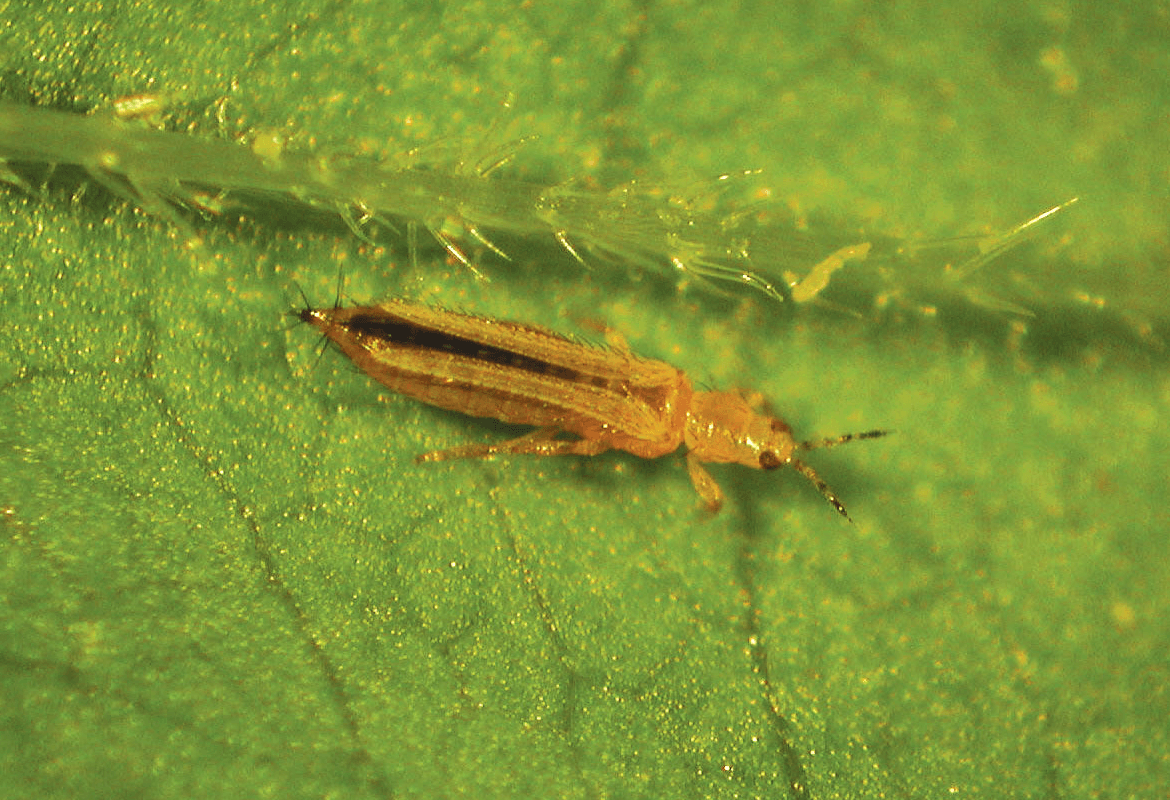
Practical control tips: Always start with an integrated approach, like combining biological sprays with natural predators. Keep your grow space clean, remove infested leaves, and monitor temperature and humidity to prevent recurrence. For growers buying cannabis seeds, it’s smart to choose resistant varieties, available in our cannabis seeds shop. Remember, prevention is better than cure, so integrate these methods into your overall grow routine.
Preventing Thrips: Tips for a Thrips-Free Grow Space
Preventing thrips is often easier than controlling them. Start with a clean grow environment: disinfect your tools, pots, and spaces before planting new cannabis seeds. Maintain optimal humidity – around 50-60% in early stages – to deter thrips, as explained in humidity during cuttings. Also use sticky traps or lures to catch early signs and introduce beneficial insects preventively.
Other tips: Opt for organic substrates and avoid over-fertilization, which can attract thrips. For outdoor growers, it’s advisable to screen your plants with nets. By following these steps, you minimize risk and can focus on growing healthy plants with cannabis seeds that you can easily order cannabis seeds.
Frequently Asked Questions About Thrips on Cannabis Plants
What Are the First Symptoms of Thrips on Cannabis Plants?
The first symptoms are often silvery spots on the leaves, caused by sap sucking. Leaves may also curl or deform. Early detection is crucial; check regularly with a magnifying glass for the best results.
How Do I Prevent Thrips When Growing Cannabis?
Prevention includes maintaining good humidity, using clean materials, and introducing natural predators. Read more about cannabis growing for comprehensive tips to keep your plants healthy.
Is Biological Control Safe for Flowering Cannabis Plants?
Yes, methods like predatory bugs or neem oil are safe, as long as you avoid the flower buds. They are effective and environmentally friendly, as discussed in biological pest control.
Can Thrips Affect the Quality of Cannabis Oil?
Thrips can damage the plant, affecting harvest quality and thus cannabis oil. For more info on cannabis oil, ensure your plants are pest-free before harvest.
In conclusion, thrips on cannabis plants don’t have to be a disaster if you identify and address them in time. With the right knowledge of their life cycle, effective control methods, and prevention tips, you can create a healthy grow environment. Whether you’re starting with ordering cannabis seeds or already experienced, stay vigilant and integrate these strategies into your routine for the best results. At freeseedsonline.com, we’re ready to help you with quality cannabis seeds and advice for successful growing.


